Maximizing Your Small or Medium Business
Utilize the Presumptive Income Scheme to your advantage
Running Small and medium businesses (SMB) offers unparalleled flexibility and the opportunity to chart your own professional path. However, running a SMB comes with its own set of challenges. Most daunting challenge is managing finances and taxes. Fortunately, the presumptive income scheme can simplify your tax obligations, allowing you to focus more on growing your business and less on paperwork. In this blog, I'll explore how to run your SMB business effectively by leveraging the presumptive income scheme.

What Is the Presumptive Income Scheme?
The presumptive income scheme is a simplified method of taxation introduced to ease the compliance burden for small businesses and independent professionals. Instead of maintaining detailed financial records and calculating actual profits, eligible businesses can declare a fixed portion of their total receipts as income. For professionals covered under Section 44ADA, half of the annual gross receipts are treated as taxable profit, regardless of actual expenses incurred. This approach helps SMBs meet tax requirements with minimal administrative effort, particularly when annual earnings remain within the prescribed limit of ₹50 lakh.
Advantages of the Presumptive Income Scheme for SMBs
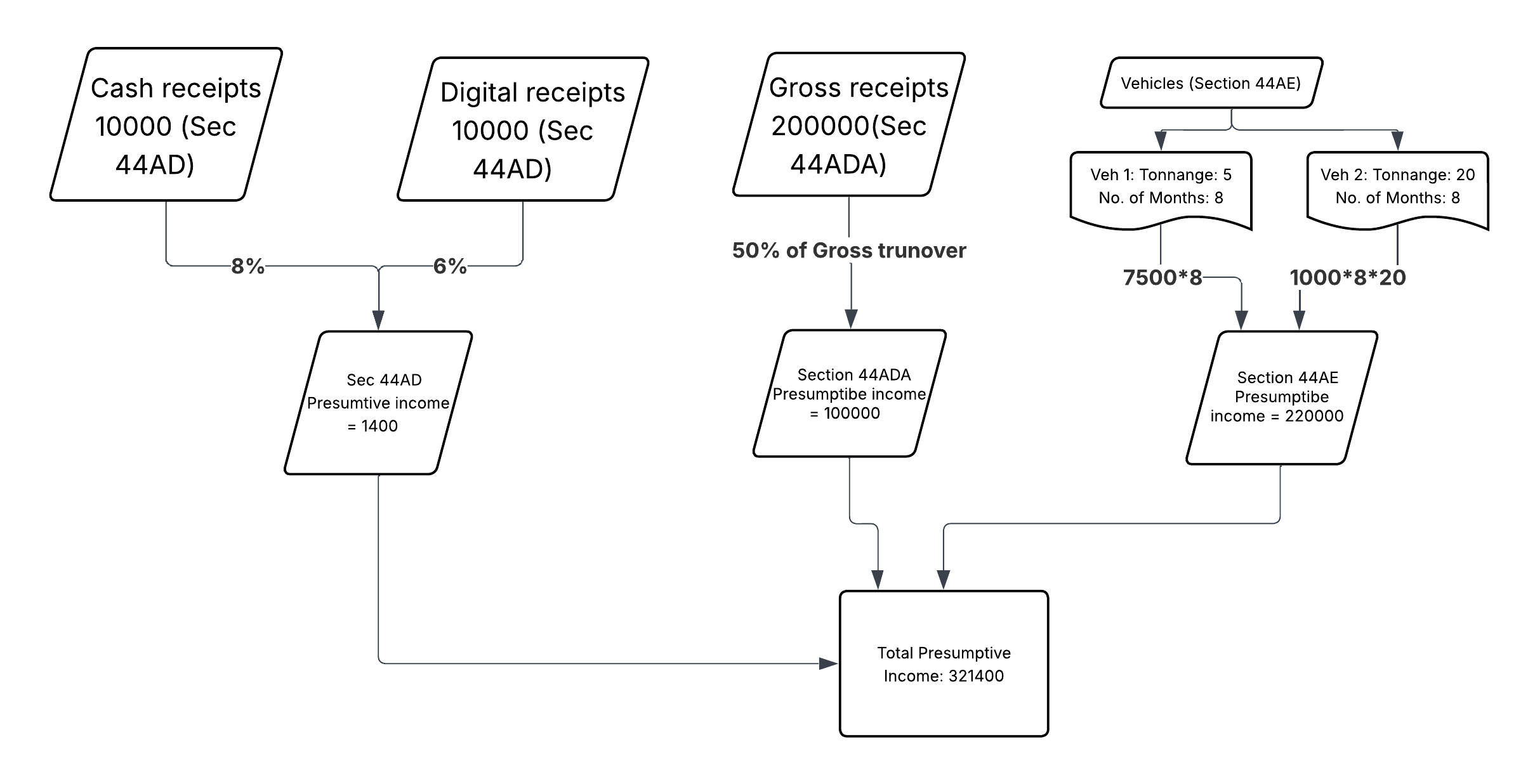
One of the biggest advantages of opting for presumptive taxation is the simplicity it brings to financial management. SMBs are relieved from maintaining extensive books of accounts, making it easier to manage finances independently. The scheme also lowers the chances of detailed tax scrutiny, provided the eligibility conditions are met. Since income is calculated using a predefined percentage, SMBs gain clarity on their tax obligations well in advance, enabling better budgeting. Additionally, the flexibility to pay the entire tax liability in one installment by mid-March removes the stress of quarterly advance tax payments and helps save valuable time that can be invested in client work.Following figure illustrates the calculation of presumptive income for your business.
Please navigate to our free presumptive income calculator to calculate your presumptive income and also to know more about various sections under presumptive scheme.
Steps to Effectively Conduct Small Or Medium Business Under the Presumptive Income Scheme
To make the most of the presumptive income scheme, it is important to first understand whether your profession and income level qualify under the applicable provisions. While elaborate accounting is not mandatory, maintaining a basic record of invoices and receipts can help resolve any future queries. Professional invoicing not only enhances credibility but also ensures smooth compliance. Since income is presumed, SMBs should proactively estimate their tax liability and set aside funds periodically. Filing returns within stipulated deadlines is crucial, and when uncertainties arise, consulting a tax professional can help avoid costly errors.Common Pitfalls to Avoid
As income grows, it is easy to cross the eligibility threshold without realizing it, which may result in unintended non-compliance. Another common oversight is neglecting basic documentation, assuming it is unnecessary under presumptive taxation. Even minimal records can prove essential during assessments. Tax regulations are subject to change, so staying informed through official notifications or professional advice is critical to maintaining compliance.Conclusion
For SMBs seeking a balance between compliance and convenience, the presumptive income scheme offers a practical solution. By reducing paperwork and providing clarity on tax obligations, it allows professionals to concentrate on expanding their client base and improving service quality. However, disciplined record-keeping and periodic consultation with a tax expert remain essential to fully benefit from the scheme while staying compliant with evolving regulations.